How Fast Can You Deliver During an Emergency?
Speed matters most in the first 48 hours after a flood or ice storm takes out septic and water lines. North Little Rock Porta Pros keeps standard porta potty rental units staged for exactly this reason, because waiting on a normal delivery window during emergency porta potty rental situations is not an option. A roll-off delivery truck needs about 60 feet of straight clearance behind it, which matters when a driveway is blocked by debris or a downed line. If your property sits off a narrow lane, tell the dispatcher up front so the driver can plan around it. North Little Rock households dealing with a failed septic system after flooding should also read septic tank warning signs, since a tank that backs up during heavy rain often needed septic pumping service already. We serve the city directly and can reach Sherwood, 6.9 miles north, and Jacksonville, 10.1 miles northeast, on the same run when a disaster response covers multiple neighborhoods. For county-level shelter operations or church relief sites, pair toilets with a handwashing station rental so responders aren't relying on hand sanitizer alone, which does not meet the handwashing standard under 29 CFR 1910.141(d)(2).
What Do Relief Sites Actually Need?
A relief site needs toilets, water, and a place to throw debris, and North Little Rock Porta Pros brings all three. OSHA 1926.51(c)(1) sets toilet ratios for work crews: one facility for 20 workers or fewer, then one toilet seat and one urinal per 40 workers as crews grow past that. Volunteer cleanup crews and debris removal teams count as work crews for this purpose, so a church group of 15 needs one unit, but a 60-person cleanup needs several. OSHA 1926.51(a)(1) also requires an adequate supply of potable water at any place of employment, which is why a portable sink rental or handwashing station belongs next to every cluster of toilets, not just the medical tent. Debris removal after a storm is its own project. A roll-off dumpster rental clears downed limbs, ruined drywall, and flood-soaked insulation fast, and what cannot go in a dumpster matters more than usual after a flood, since paint, fuel, and chemical containers often wash into yards. If your crew is scraping or coating anything with contaminants like paints or herbicides during rebuild work, OSHA 1926.51(f)(1) requires washing facilities on site, not just a sanitizer pump. For temporary shelter, a restroom trailer rental gives displaced families a private, flushable option instead of a row of standard units, and a storage container rental secures donated supplies or salvaged belongings until people can return home.
Is Site Security Part of Disaster Response?
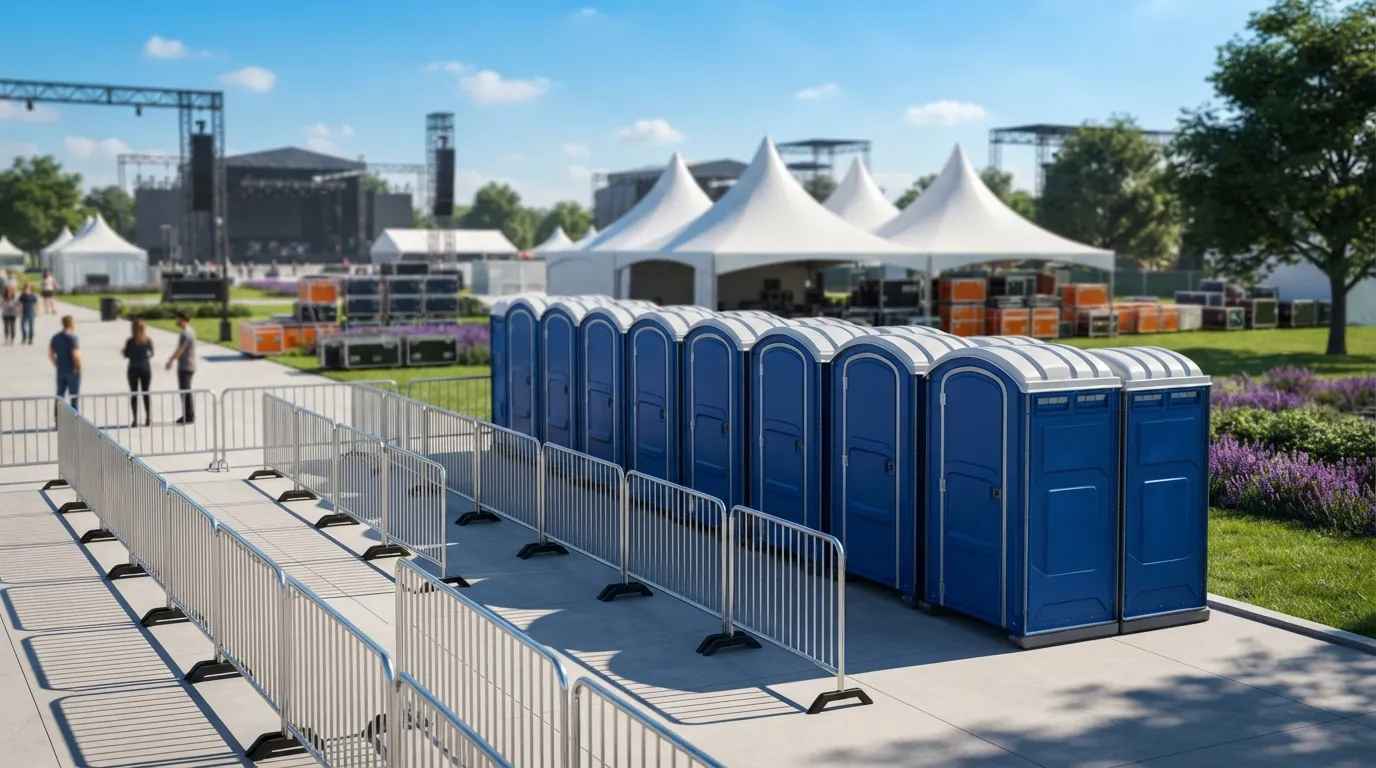
Yes, and it's often the part people forget until looters or curious onlookers show up. Damaged homes and staging yards for donated goods need a boundary, and temporary fence rental around a relief site keeps foot traffic controlled without turning the property into a construction zone. Chain link temporary fence sections go up fast around a collapsed structure or an active debris pile, which also satisfies the basic housekeeping intent behind OSHA 1926.25, keeping scrap and debris cleared from areas where people are working or walking. For nighttime operations, particularly generator fueling or dumpster staging after dark, OSHA 1926.56(a) sets minimum illumination levels for work areas, so a light tower rental isn't optional once crews are working past dusk. If a relief site loses grid power entirely, a temporary power pole can carry a 200 amp service to run lighting, pumps, and charging stations for radios and phones. North Little Rock Porta Pros can bundle fencing, lighting, and toilets into one delivery so a shelter coordinator makes one call instead of five, which matters when the coordinator is also trying to feed 200 people and find missing pets.
| unit | duration | typical price |
|---|---|---|
| standard | day | $150 |
| standard | week | $200 |
| dumpster | day | $75 |
| dumpster | week | $600 |
| fence | day | $50 |
Frequently Asked Questions
How quickly can you get toilets to a disaster site?
We prioritize disaster calls and aim for same-day or next-day delivery depending on road access and how many units are needed. A roll-off or trailer delivery still needs roughly 60 feet of clearance behind the truck, so clear a path if debris is blocking the driveway before we arrive.
Do FEMA or relief organizations get different pricing?
Standard unit rates apply the same way regardless of who is paying, typically running $150 to $350 a day depending on quantity and duration. Contact North Little Rock Porta Pros directly for a written quote covering the full relief period, since longer deployments often shift to weekly or monthly rates.
How many toilets does a shelter or relief site need?
Follow OSHA 1926.51(c)(1): one toilet for every 20 workers or volunteers, scaling to one toilet and one urinal per 40 as headcount rises. Displaced residents aren't technically covered by that ratio, but it's a reasonable planning baseline. See how many porta potties do I need for worked examples.
Can you service units daily during an active disaster response?
Yes, and high-traffic relief sites often need it. The baseline service interval under ANSI/PSAI Z4.3 is once weekly for light use, but a shelter serving hundreds of people daily needs pumping far more often to avoid overflow.
What about accessible units for elderly or disabled residents?
ADA Standards section 213.2 requires at least one accessible unit in any cluster of single-user toilets, and never less than 5 percent once the cluster grows. Ask for an ADA accessible porta potty when you place your order so it arrives with the first delivery, not a follow-up trip.
Next step
Get a delivery date
Tell us the address, the dates and the headcount. We size the order and confirm the route.