
How many restrooms does a race in North Little Rock need?
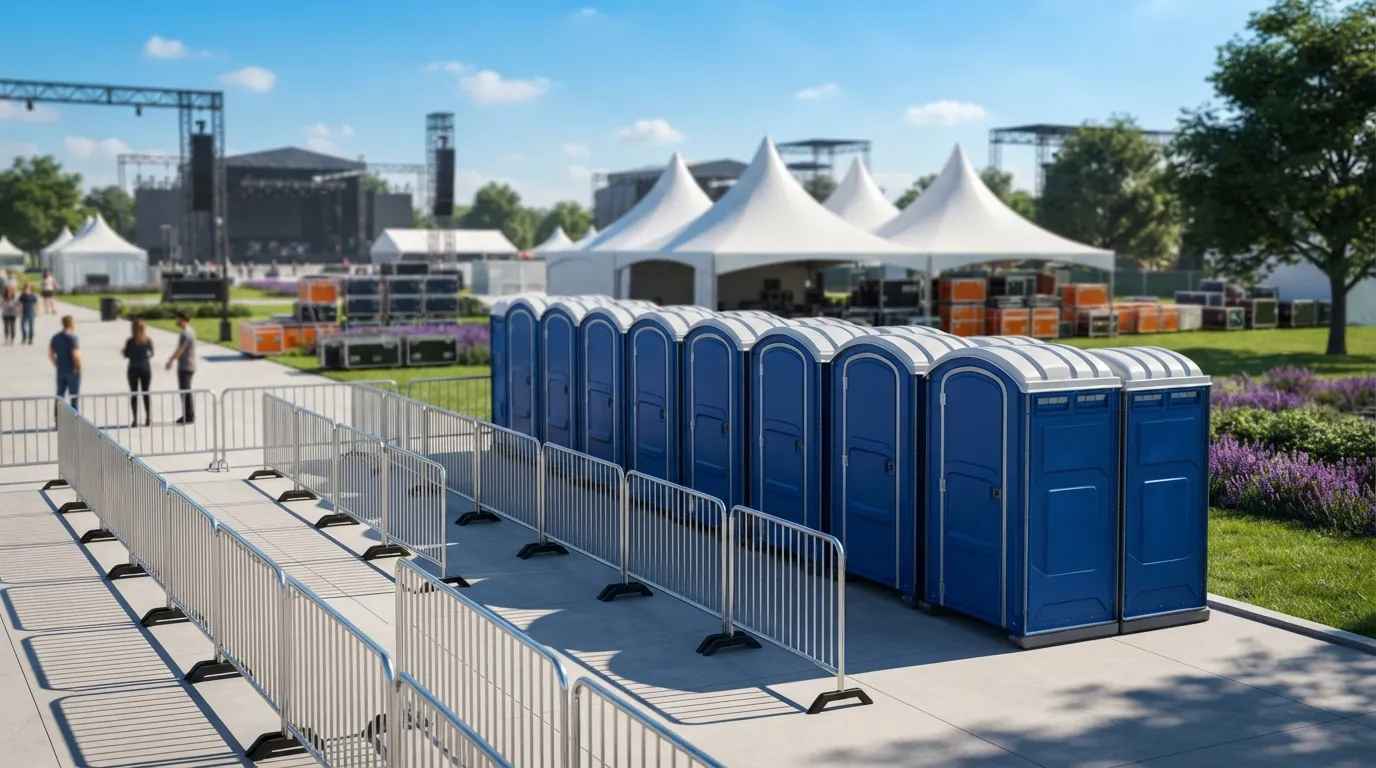
Course length and runner count drive the number, not just total headcount. A start line with 500 corralled runners needs more units than a finish line where people disperse fast, so how many porta potties do I need walks through the math event by event. OSHA 1926.51(c) sets construction ratios of 1 toilet per 20 workers, and while a road race isn't a jobsite, race directors in North Little Rock use the same logic: cluster units where people stand still longest. Start corrals, mile 1, the finish chute and any beer garden or family zone all need their own count. ANSI/PSAI Z4.3 sets a baseline service interval of once a week for 10 users over 40 hours, which is a staffing standard, not an event math tool, but it tells you units get dirty fast under heavy short-burst use. For a marathon spanning North Little Rock and into Sherwood, 6.9 miles north, or looping toward Jacksonville, 10.1 miles northeast, spacing matters as much as total count. Don't bunch everything at the finish. A porta potty placement guide helps race committees map restroom zones against elevation, water stops and spectator points along the whole course.
Standard units run $100 to $350 a day depending on event size and rush timing, and weekend race rentals often land near the $250 mid-range for a two-day footprint. Deluxe flushable units cost more but move faster through long lines, which matters at a finish line with 2,000 runners funneling through in under an hour.
Do race restrooms need ADA accessible units?
Yes, and the rule is specific: where portable toilets are clustered, ADA Standards 213.2 requires at least 5 percent of the units be accessible, with a minimum of one no matter how small the cluster. A race with 10 standard units at the start line needs at least one ADA unit sitting right there, not somewhere off to the side. ADA units need a 60 inch turning circle inside per ADA Standards 304.3.1, a 32 inch clear door opening under ADA Standards 404.2.3, and a 36 inch clear approach path per ADA Standards 403.5.1. On grass or gravel near a start line, ground stability matters too. ADA Standards 302.1 calls for surfaces that are stable, firm and slip resistant, so we set accessible units on level pads, not tilted turf. ADA accessible porta potty rentals run $120 to $240 for a week in the FACT BANK price bands, which covers most weekend race timelines without stretching into a full month rate. If your race draws wheelchair participants or spectators using mobility devices, put ADA units at both the start and finish, not just one end of the course. ADA restroom requirements breaks down reach ranges and operable-part rules that also apply to handwashing stations you stage nearby.
Races in North Little Rock also need lighting and power at pre-dawn start times. If you're running a light tower or timing tent off a generator, a temporary power pole needs to be braced against wind and foot traffic, especially near a crowded start corral. Knowing how to brace a temporary power pole matters here: set the base plate on stable, level ground, run guy wires out at an angle away from the runner lane, and check the wires again after the corral fills in, since foot traffic can nudge a loose stake. Keep the whole footprint outside the runner lane so nobody clips a cable at 6am in the dark. GFCI protection under OSHA 1926.404(b)(1)(ii) still applies even on a one-day event setup. Pair the pole with a light tower rental for early starts and you've covered both light and load without running extension cords across the course.
What other services does a marathon in North Little Rock need?
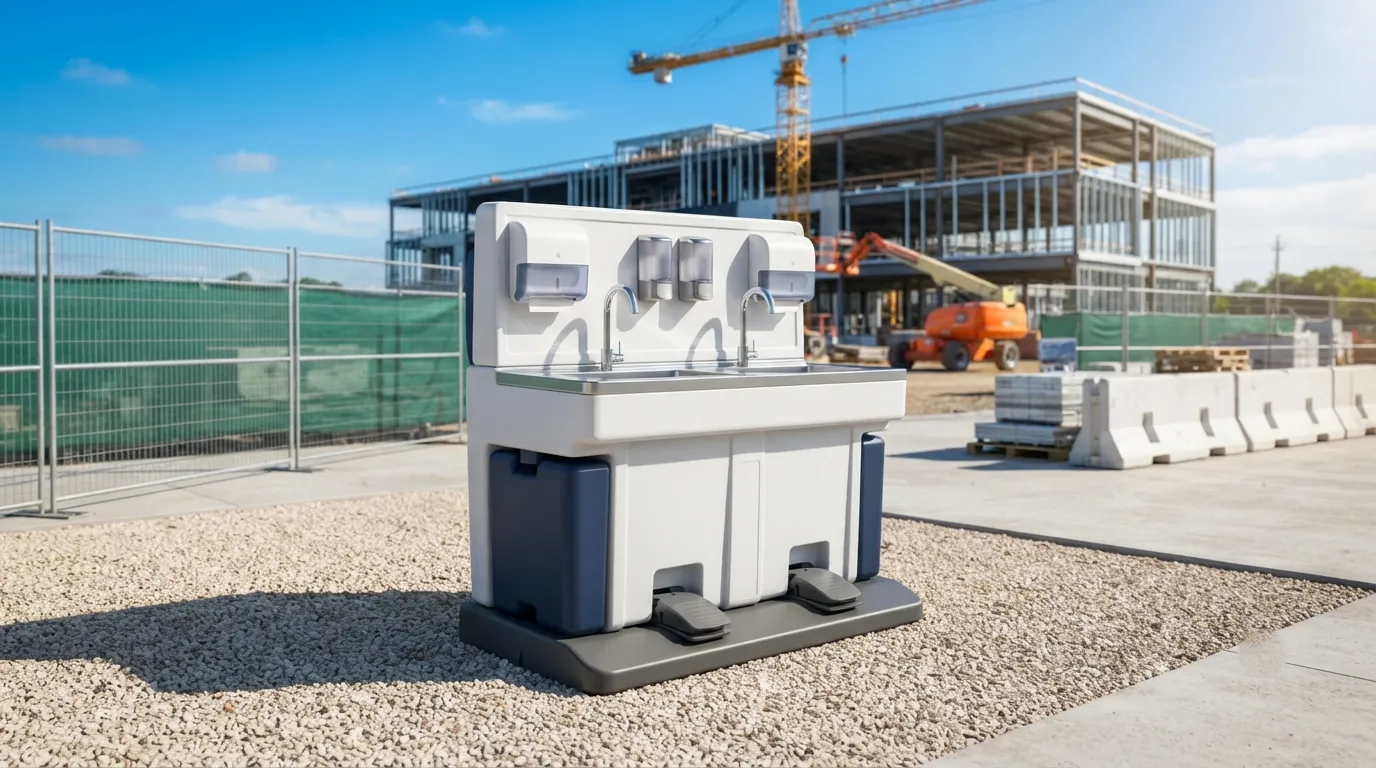
Water stations mean handwashing, not just drinking cups. 29 CFR 1910.141(d)2) requires soap and towels or a hand-drying device at washing stations, and hand sanitizer alone doesn't meet that standard, so pair every water stop with a handwashing station rental rather than a sanitizer stand alone. Trash volume adds up fast across a marathon route through North Little Rock, especially with gel wrappers and water cups piling up at every aid station. A roll-off dumpster rental at the finish festival area handles bulk waste better than a dozen small bins, and dumpster weight limits matters if you're also collecting fencing, barricades or tents afterward. Crowd control barrier at the start and finish keeps runners and spectators separated; see crowd control barrier rental and temporary fence rental for staging options along tight finish chutes. If your race weekend includes a headquarters tent or gear check, a storage container rental keeps bibs, medals and volunteer supplies locked down overnight. For races that also draw from Maumelle, 14.1 miles northwest, or Cabot, 19.1 miles northeast, coordinating delivery timing across a wide radius matters, and our service areas page covers routing across that footprint. Compare full event costs against a restroom trailer rental cost breakdown if you're staging a VIP or timing area needing something nicer than a standard unit.
How far in advance should we book race restrooms?
Book 4 to 6 weeks out for a marathon size event, especially one with 1,000-plus runners. Weekend rates run higher than weekday, and popular race dates fill delivery slots fast. Earlier booking also gives more flexibility on unit mix, standard versus deluxe versus ADA.
Can we place restrooms along the course, not just at start and finish?
Yes, and you should. Mid-course placement near mile markers reduces crowding at the finish. Delivery trucks need about 60 feet of straight clearance, so pick course-adjacent spots with road or lot access, not tight trail sections.
Do we need a permit to place restrooms on city streets?
Placement in the public right of way needs confirming with the city of North Little Rock directly; we don't have a citable local ordinance to quote here. Check with the city permit office before finalizing your course map layout.
How often are units serviced during a race weekend?
ANSI/PSAI Z4.3 sets a weekly baseline for 10 users over 40 hours, but race-day volume is far heavier and short-burst. Most race weekends get a pre-event service, a mid-event check if it's multi-day, and pickup service after teardown.
What's the difference between standard and deluxe units for a race?
Standard units use a 60 to 70 gallon tank and work fine for general runner and spectator use. Deluxe flushable units, covered at deluxe flushable porta potty, suit VIP areas, sponsor tents or finish-line hospitality zones expecting higher comfort expectations.
Next step
Get a delivery date
Tell us the address, the dates and the headcount. We size the order and confirm the route.